
Hard Boiled and Loaded with sin—who knew?
MY story is in this fab noir anthology!
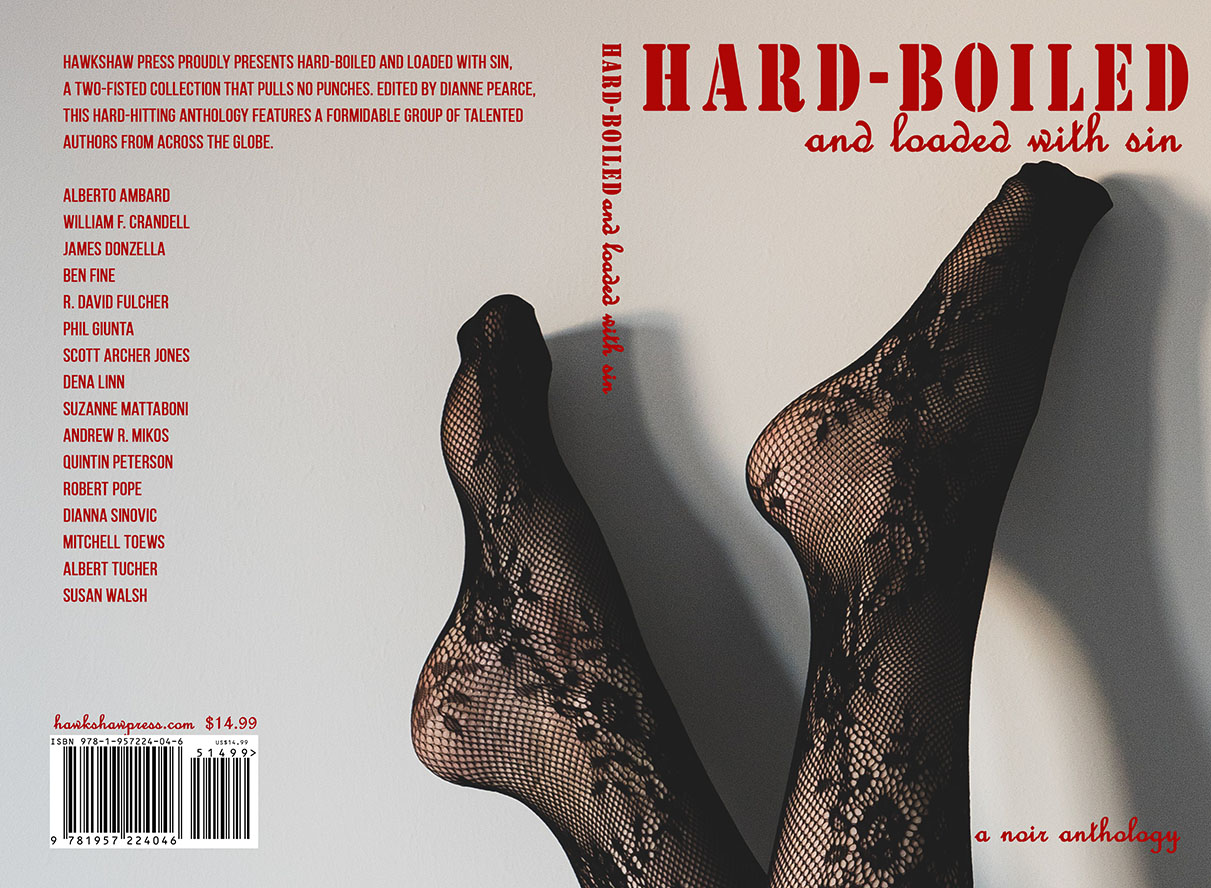
Not just grimy but hard-boiled. Read my lovely noir story below AND support Dianne and David of Devil’s Party Press. – buy the book here: Click
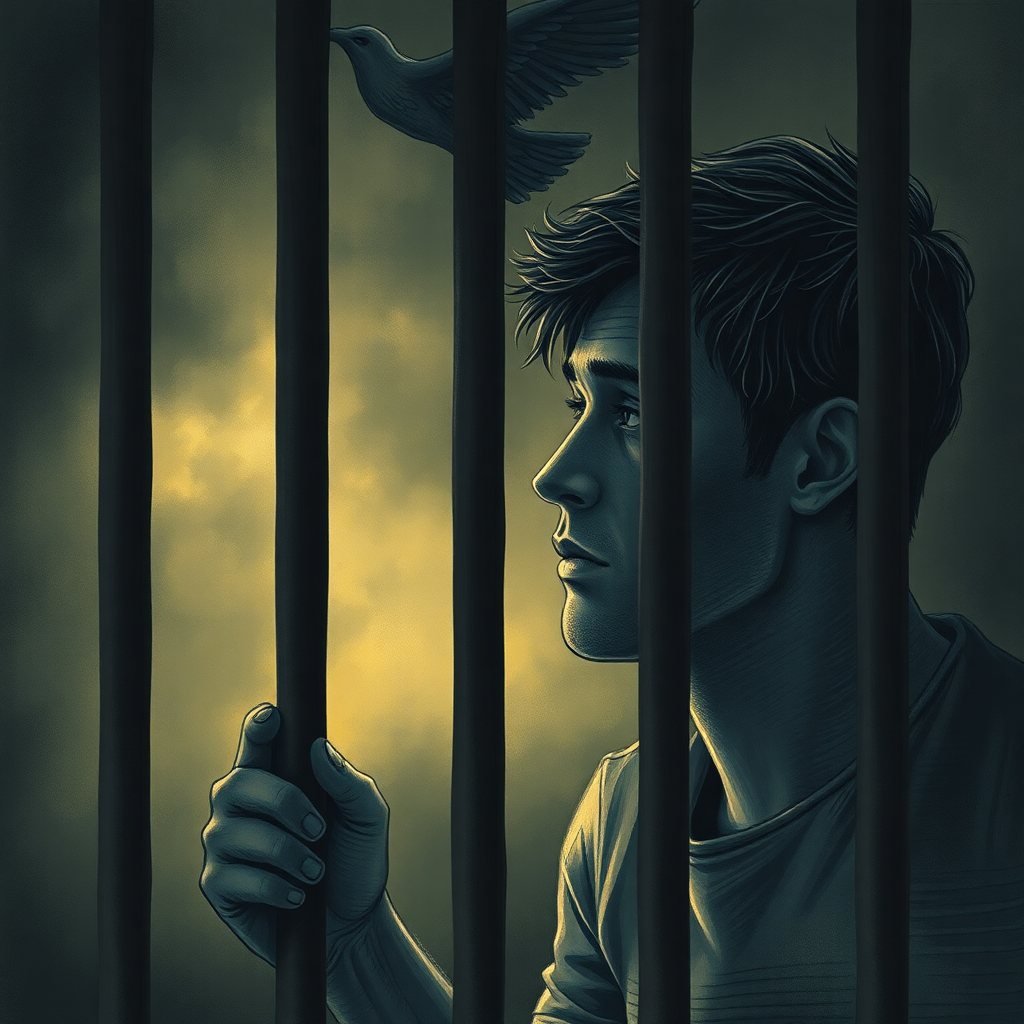
Get on Home –
By Dena Linn
It was snowing big, wet clumps of white that slammed into the picture windows of the Colorado bound bus. Beto startled, hearing distant sloshing, snow slipping under the bus’s wheels, his forehead damp, his pits and palms in a sticky sweat. His focus zoomed in and out, a kaleidoscopic dream. His head rested against the frozen window, slick glass, like a cell wall and his hooded gaze caught snow sliding, falling, then it was sucked under; he sensed the same pressure in his gut, under and under and again, boots trampling his stomach. He might have called out, but no one cared. Further on, the nightmare continued, shuffling men, grey men, grey walls, grey food, grey metal. He’d been one, shit-kicking rough and fists proud, only an extra twenty-eight months, no one cared less. And that “time on top” landed Beto ass first, not in license plate stamping but home economics. It all floated, the sounds, the men, mixed in the dream.
Everything turned quiet, except for the start-stop whine of the sewing machines’ balance wheel. Eventually, Beto’d made Lilly a doll, in his spare time, named it Lillytwo. Sewn and stuffed, with black buttons for eyes, full red-painted lips, pink and white ribbons for striped socks, wearing a blue pinafore. Meticulous, calloused fingers, Beto had sewn each quarter-inch of lace, patting and blowing the glued parts till they dried. Little sister Lilly was probably twenty now.
Stiff, his neck twisted; the side of his face, its skin frozen, the nightmare memory washed over like the wool-cycle. Between the yard and infinity fence, the guy wasn’t dead, and anyway, good riddance. Beto wanted to yell, Get up, lazy fuck, fight! But guards swarmed, clubbed and shackled him, his stomach felt the hit, tight pressure, the prison yard blazed, and he was gone, gone, and falling.
Another image, a brain locked in a ringing tower, was he dreaming? Beto had lost count, but he knew he had Lilly’s doll in the sack
A sudden gruff voice. “Your stop!”
Beto gathered his bag, nerves on pins, suddenly surrounded by supposedly sleeping strangers. He pulled his beanie hat tight, chanting silently: Keep cool, walk on past. They don’t know you. The bus door slammed, a hiss of brakes. It drove off and left him in the road’s frozen slush. Now he was just cold.
He piece stepped, somehow knowing to stay off the balls of his feet. Jabbing, always recruiting, that high school boxing coach’s voice toned clear: “Maintain lightness in your heels Beto-boy, you’ll run faster.” Beto whipped around, eyes scanning his heart in his throat. No one there. The bus station was in pitch except for the dim glow of an LED display. 1:15am. Beto made it to the station’s corner and all the memories flooded back under the street lamps’ glow, his youth, other boys, all pussies, bad decisions—women, bricks, and blood, nothing petty. All in fun. Shiny black asphalt peeked through white tracks, indicating where caffeinated taxi drivers usually waited.
Everything was quiet. Icicles hung like fireplace pokers from low roofs; there was a slight wind blew and nothing moved. The town looked forlorn. There was the seen-better-days general store he’d started his career in, stealing candy. Its curtains were drawn tight in fear. Next door, a closed sign hung from a string dangled behind the salon’s glass front. Beto took his hand up, leaned close, and then was looking far back into the darkest of recesses. Dust mites swirled around his mother, face pinched, up to her neck in a black cape, hiding hands that stroked the family Bible, that space-age plastic drying bucket over her head, and at the very base of that leatherette chair, sat little sis Lilly in blue, her eyes matching, wide legged and ever diligent working her own dolly’s hair. His hand dropped with his gaze to the dusty window frame. Then they weren’t there at all.
Beto let his head turn slowly, the view closed around him, the street lights glowing, the cold, dirty glass, metal chains dragging. No chance to breath, the sound of metal sliding, the buzzer, the slam, his shoes licking his side of the cell door, then it was his shoes wet with snow. He shouldered his carry-home sack and turned, blinking, looking up. A vertical sign flashed above a corner cut door. The bar was still there. And it had that same busted neon: Rink here, Eat here. Some things, even if you want them to, never change.
Beto, my son, alcohol’s the Devil’s drink. It’ll take you from those who love you.
His mother’s voice rose behind his head. A sharp intake of air, he spun around, gripped, tense, sweating. No one. He panted, stomped his feet; his mind weak, traumatized, chilled. He yanked open the bar’s outside door and then pulled it closed against the night. A heater gurgled above, belching hot, dry air.
Then he opened the inside door and stepped into its darkness.
His eyes took their time to adjust, widening and closing, years and memories flew by. They’d installed diffuse colored spotlights into the wood ceiling that now winked like so many scattered stars. He let his eyelids close softly, his knees alternately bending just enough to raise and lower his state-issued rubber heels, thinking lightness, contemplating the safest escape route. His fingers tightened white around the neck of his sack.
The backs of a neat-looking couple faced him. A man, the hem of his smoking jacket, hiding the barstool, hat on the bar to the side of his drink. His hands were hidden. There was a trim female, fidgeting for balance on the stool at his side. Beto’s eyes shifted to another man, sitting undisturbed at a square table. He had a thick neck visible at the top of a black turtleneck, monster hands swallowing a dime-store soft cover, and a nasty scar, even more gruesome in the diffused blue spotlight; he had a bottle of beer neat on a coaster. Beto held his body tight, head still, eyes shifting, saw the worn briefcase at the man’s feet. Beto sensed the man’s eyes move from his book to Beto’s sack and back down. Straight ahead, Beto focused, the delicate cream neck and large, hooped earrings, back narrowed down to tiny buttocks that perched. He saw a long pale arm raise, the hand disappeared at her face then dropped to tap the side of a martini glass. Her hair was white and punky and bobbed short, strands feathered around those hoops. She suddenly seemed familiar, like from high school.
The barman nicked his head as Beto approached. “Long time! How’s your mom?”
“Wouldn’t know.” Beto shook his head darkly and let the sack plop between the barstool’s feet—a five-stool separation from the couple. Beto arched his back and looked down. His naked wrists on the bar top, he was free.
“This here is Arturo. Everyone knows Art.” The barman raised an empty wineglass, tipped it in the direction of the man with his hat on the bar, sitting next to the woman. Then he brought the glass back into the light, squinted, stuck his rag in and rubbed, slung the rag over his shoulder, inspected his work.
Neither the man nor familiar-faced woman looked in Beto’s direction. The man, long lean fingers, was picking his cuticles; rings of various stones, shined. Beto thought the woman could have been in history class, what, fifteen years ago.
“No, nope. Don’t think I do.” Beto’s ears heard the beer taps’ siren song, saliva building at the sides of his mouth, then metal and glass collided, and Beto flinched. “Uh, can I get a coffee?”
“Sure. Let me just”—Barman was picking up pieces, his gaze never leaving Beto, his words toned upward toward the bar rail—“Hey, your mom would want you to call, Beto-Boy.”
Beto bowed his head, hiding his wince. His peripheral vision caught the woman with the bobbed hair laugh, her private joke. She shivered, starting at shoulders and slinking down to her rump. The man with the hat blocked most of his view, bigger than Beto’d thought, and a pocket square sticking out from his right breast. For a second Beto wished for the color of that square, for anything lush, calming, clean. From the corner of his eye, all he saw was the curve of the lady. Familiar, nice looking, her shoulders rose out of the loose sweater top. They were rice white and smooth. With a languid arm, she drew those lacquered nails around the bar clicking a beat. Beto followed the line of her shoulders up to that blond hairdo, then her pointed chin. The man, Art, shifted, hiked the sleeve of his shirt, his watch was enormous. Then loosened his tie, his thumb and forefinger pinched at his pocket scarf, further cutting Beto’s view, then set his lean hand on top of the woman’s fidgeting fingers, fixing his gaze on the bar’s back wall mirror.
The barman swooped over with a burnt coffee carafe, filled Beto’s cup full of black, and in one move, returned the stained flask to a Bunn burner, his hand posed then plucked up another glass. He held it vertical, by its base, then angled, a water drop at its bottom glinted off a spotlight. The barman’s lips furrowed down as he tipped the glass rim and retrieved his rag from his shoulder. That drop of water caught on his forearm sleeve. His affiliation tat menaced through the dampened fabric. Elbow up, he shoved the rag inside, rubbing vigorously. He turned to the bar’s back mirror, having a clear view of his patrons and the front door.
Beto’s eyes widened, a minatory thought, He’s inked? He watched the barman flex his glutes with each twist of his rag.
The glass sparkled as the barman set it silently on its appropriate shelf. Then he took the rag, folded it twice, and ran it in a tight sine curve from one side of the bar, past the neat couple and up to Beto. He leaned in, lips closed. “Watch yourself.”—Held the damp rag up to a spot light, then crushed it in his palm.—“What else can I get ya?”
Eyes forward, Beto worked to contemplate tapioca pudding versus a slice of pie. The pastry pedestal was on the back bar. He could see the pie from all sides reflected in the mirror and also follow Arturo’s scowl, intent between his fingernails, the woman’s hand, and the mirror. His shoulders were near his ears.
Looking down, Beto picked up the teaspoon, and stirred his coffee. Arturo’s eyes shifted, and when Beto looked again, there was the dark stare of that black turtle-neck wearing man, that bluish scar, sitting at that small table with his limp-paged book. That man broke eye contact, looked unperturbed, stretched his thick neck, left, right, and then returned to the book’s pages.
“More coffee?” The barman came carrying the burned carafe and let the hot stream flow into the cup. Beto nodded, slightly turning as if to blow on the hot liquid. He watched the woman wiggle her skirt-covered butt back and forth on the barstool, shiver, starting at her hips and ending with her white bobbed crown and the man paternally took her hand and squeezed around it. Beto had not seen a lady dressed up pretty-like in a long time.
“Glass a water if you don’t mind.”
The barman picked up a squat water glass, wiped it with vigor, threw the rag onto a pile of other rags, then stood wide-legged before the fountain. “Would the lady like still or sparkling?
“She’ll take the bubbles, and here,”—a ringed finger tapped the bar. “Jack Daniels, neat.”
Beto’s eyes tightened. Art’s hand slipped into a pocket, then flashed, low, a hint of rolled green.
“I’m going to the little girls’ room.”
Her lithe body slide from the stool. It took a couple beats before she had a tiny evening bag untangled and set on her shoulder, then she adjusted her skirt. Beto watched her hand smooth along her rump, but his mind saw the rolled cash, then focused back on her tight walk down the hall towards the phones and toilets. He watched her for as long as he dared before it became too obvious. He picked up his teaspoon and rammed it into the coffee cup, seeing greenbacks, all the plans, hearing the clink and slide of metal, seeing, again, a mangled kid, a dead guard. All the images vibrated.
“You’d do good to ring your mother.” The barman was turning a whisky glass he held between his thumb and pointer, the other hand reaching for the top folded rag on the clean pile under the mirror.
“She’s asleep and not expecting.”
Arturo suddenly straightened, pushing his chest toward the bar, towards his hat, then swiveled his head. “We’ve been expecting you, Beto, right?”
The blond bob glided into view at the edge of the bar’s back mirror and Beto was distracted. Her delicate fingertips pushed at each nostril. Beto leaned towards the reflection of her smile. It was glistening pink, and her top and bottom lips reminded him of his mother’s tea roses that came faithfully, mustering through spring’s slush and snow to blossom like it was their first time ever seeing the sun.
“We’re expecting? Darling?” A high pitch and giggly, the woman’s ankles unsteady as she slid back onto the stool. Then she popped up, standing tall on the rung to speak over Arturo’s head. “Such a bore; we’ve been waiting for so long.”
“Bus was stuck; snow, pile-ups.” Beto nodded to the barman and then let his forehead angle indicating the pie on the pedestal, trapped under a plastic lid.
Art turned on his stool, his back to the woman, and looked directly at Beto. “Well, you got your ass here now. You carrying?”
The barman’s moves quickened as he tightened his grip on the rag, holding the plate with a slice of pie in his other hand. His eyes flittered between Arturo and the plate. The scoop of a-la-mode was slipping. In a drawn-out movement, he set the pie in front of Beto and then moved back and stood, planting his feet wide between Beto and the couple. He snapped his rag between his two fists. A long minute passed, and he finally turned and grabbed another tumbler to inspect.
Beto saw the mirror reflected the man with the book. He took his beer coaster and placed it between the pages, looked at his wrist, and then leaned towards the briefcase at his feet, fussing with something solid in its depths. In the mirror, Beto saw Arturo’s shoulder twist back facing the room behind. His whole arm went straight down past that pocket of wadded cash to his side, and his hand gently patted the air. In the reflection, the ceiling, tiny colored shafts of light, and the man at the table slowly reopening his book, sliding out the coaster and replacing it under the beer. Beto’s eyes were caught between the man with the book, whose neck arched, forehead rolling up to the spotlights, and the bob, whose eyes rolled down, disdainful at her glass of bubble water, nails incessant, clicking the rim of the empty martini glass.
“I want another one!” Her voice petulant.
“We’ve been waiting—and we don’t like to wait.” Art spoke to the back mirror, his eyes drilling. Beto adverted them, feigning contemplation of a fork full of pie. The flaky crust, the goo, the slippery ice cream, and a thought slide into his mind and grabbed, then shook him. It wasn’t the woman who looked familiar, it was something with this guy, Arturo. The thought made him gulp and rub his hands on his pants. His fork clattered to the floor like so many keys.
The barman’s hand descended with grace and placed another fork in front of Beto and then returned with two white napkins sliding then pressing down firm along the bar top. Beto observed the blue veins popping on the back of the barman’s hand and heard his closed mouth hiss, “Them’s bad news, eat your pie, Beto-boy.” Beto scrunched the napkin in his lap. The barman stepped back, grabbed the damp rag from his shoulder, spun facing the back mirror, and held the rag tight, searching Beto’s eyes. He then said, “Lilly. She’s gone.”
The sack was safe on the floor. Beto’s boot could feel the resistance of Lillytwo. “Gone? Far?” Beto’s head tilted to the side and up. Wasn’t little Lilly too young? Beto crimped, a dark memory, his mother white fisted as she yanked off his sister’s doll’s head with a sneer that said, “Aren’t you a little too old for this?” Mother held the head, a trophy, and laughed. Lilly ran for cover into Beto’s arms. Then he’d been sent away, his arms locked away, and Beto learned to fear the worst. He searched the barman’s face
The corner of the rag was sticking up from a Collins glass, and the barman drew it out softly, holding the glass to the light, rotating it to the left, to the right. His profile to the bar’s back mirror, his voice soft like a-la-mode. “Buried, closed coffin—almost put your mother in the next grave—Beto-boy.”
His gut crammed, intestines twisted. “Huh?”
Taking up a delicate glass, bulbed for rich cognac, the barman held it in front of his eyes and regarded Beto through it. Beto saw a resignation through that warped curve. The glass, aloft, in front of the barman’s squint, in front of Beto’s eyes, started to fill, drop by precious drop, not with a golden liquor but a burgundy blood.
Then the bobbed hair leaned far forward over the bar, turned, ignoring Arturo, and faced Beto. “We were waiting, Art’s waiting. Me too.” She giggled, rubbing her nose. A tickle of blood leaked over her top lip. “But you’re here now”—Holding a thin bar napkin to her nose—“That’s obvious.”
Beto looked at her pouty face and reassessed. It looked hollow and tinted yellow. The pink of her lips, like a paint streak, her nose, twitching, misshapen like a boxer he’d known. The decision: not attractive. He hadn’t seen a female outside of in a guard uniform in ages, but he still had his senses. He ate his pie, controlled, slow, sensing each bite of sweetness slip down, only the pie, not the lady. And, today a free man. Time done, lessons learned, all different, all new. And Lilly, dead? Painful to picture any different than dolls and bows; an ache was rising.
“That’s obvious.” She said again.
Beto’s body shuddered, his head jerked hearing the smack of a hand hitting a cheek.
Arturo! That was Art, Art Betancourt, failing school, dragging classes behind, forever the wiseass, a whole different kind of trouble. He saw the woman touch her blossoming-red cheek and Art’s fingers bullying her other hand into the bar top. “That was not necessary, dear.”
“You’re hurting.” Her nose dripped; her voice squeaked.
Beto sat back from a stinging memory, one of thousands. In the mirror, he could no longer see the man with the book. The book was alone, holding the table, but the briefcase was gone. The thick-necked man was gone too and the bar door closed. Not there for whatever Art was leaning into.
The barman caught the house phone on the first ring and handed it across the bar. Arturo had to remove his hand from the woman’s, taking the call. Beto, in the mirror, could see his eyes widen and then cross down.
The barman leaned into his drip rail, leveling with Beto’s eyes, “You should go now Beto, get on home.”
Beto took the cue, placed a couple bills on the bar, leaned over between his legs and grabbed his sack. He turned a soft smile to the barman. Crossed with quick steps to the first door. Stepping in between the two doors, the dry air blew from the heater and choked. He steeled himself, then opened the outside door.
Big, wet clumps of white slammed into the grated windows; the bus took a sharp curve on two wheels. A lurch and a seat belt bit into Beto’s gut. A sudden heaviness around his wrists proved to be double locked handcuffs. Vision dry, heat belching from the bus’s floor heaters up along the window into Beto’s hazy eyes that saw the barman, standing wide-legged, bullet-proof vest tight, smiling at the confusion on Beto’s face. Smiled while Beto wondered if he was still dreaming.
(First published by Hackshaw Press – all rights reserved by Author)